Strategic user research that shaped the future design of OPPO Series 3 wearable devices, translating emerging user needs into product opportunities and long term experience vision.
User Research

Strategic user research that shaped the future design of OPPO Series 3 wearable devices, translating emerging user needs into product opportunities and long term experience vision.
User Research
Project Overview
As a UX Researcher Intern at OPPO Mobile Telecommunications from April to August 2021, I collaborated closely with the product team on early-stage qualitative research for smartwatch concepts. I conducted one-on-one semi-structured interviews and focus groups across different cities to understand wearable users’ needs, pain points, acceptance, and willingness. Because of the NDA and the sensitive nature of wearable technology projects, this overview focuses on the scope of my research responsibilities and learnings rather than confidential product specifics.
Role
UX Researcher
Timeline
4 Months
Type
Wearable Device
UX Research
Concept Testing
Health & Wellness
Research insights supported OPPO’s next smartwatch generation, which launched in 2022.
Evaluated around twenty smartwatch feature concepts with users before future launch decisions.


I was a UX researcher Intern at OPPO from April 2021 to August, 2021. Collaborated closely with PM, I worked on qualitative research in the early stage, conducting one-on-one semi-structured interviews and focus groups in different cities to discover smartwatch users’ needs and pain points. Around 20 different concepts, which associated with smartwatch features, have been proposed by PM, I also took the responsibility to test our concepts and gauge users’ acceptance and willingness before launching it in future.
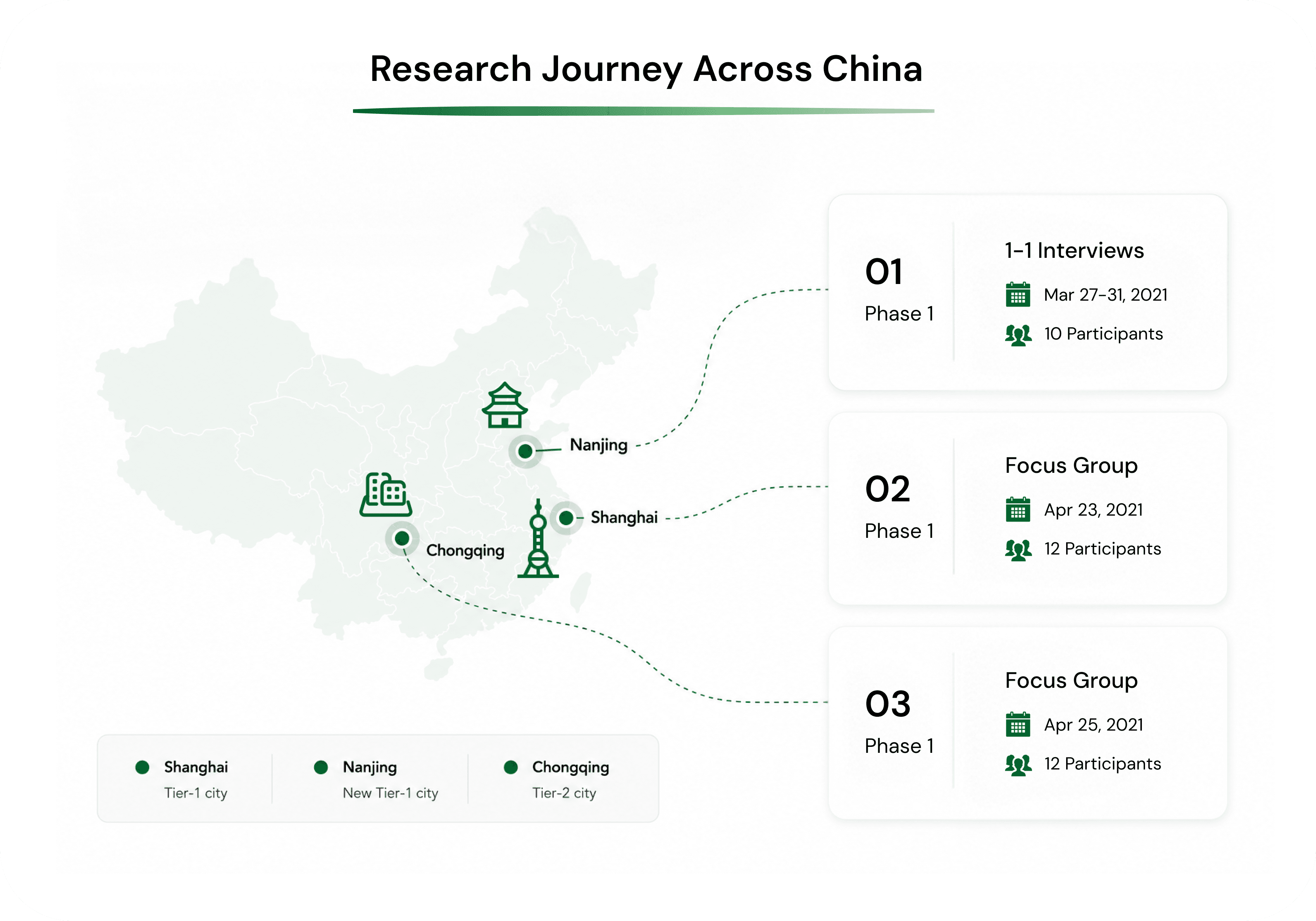
The user research was made up of 2 phases. Phase one we conducted 10 one-on-one interviews and phase two we did focus group with 24 participants (6 participants as one group, 4 groups in total).
Participants' locations, mobile and smartwatch operating systems, types of family and other factors related with health and fitness are all carefully considered during recruitment. We deliberately selected participants for the sample to be representative.
Fitness (exercise):
It's hard for young professional users to get large time blocks to do exercise, and they worry about the perfect amount of exercises in that ended up getting no exercise at all.
Users who are fitness workout beginners feel anxious after they got workout injuries due to training/technique errors, and they need more professional guides and advices to prevent injuries in the future.
Health (sleeping):
Many users are not satisfied with their "deep sleep duration" and wish to get longer-lasting deep sleep.
Some users feel an inconsistency between their own perception of their deep sleep duration and the monitored data shown on their smartwatch. Users are suspicious about the accuracy of the sleep tracking monitor on the watch.
Users are not only concerned about their overall sleeping time, but also how many hours of deep sleep they got and how good their sleep quality was each night. Three clear cues were consistently recognized by users as signals of high-quality sleep: 1) falling asleep quickly after getting into bed, 2) sleeping straight through the night, waking up no more than once, and 3) feeling energized and refreshed upon waking up.
Some users mentioned they had no idea their heart rate or blood oxygen fluctuated during sleep, and expressed curiosity about whether these metrics could explain why they woke up feeling tired even after a full night's sleep.
Others:
Smartwatch-induced anxiety: Some users felt anxious with those personal health data because they prone to over-diagnosing every alert from their wearables. Those health data is usually ambiguous or served up without any contextual information.
Concept Testing
25 feature concepts of OPPO Watch series 3 had proposed by the PM, and those concepts were categorized into 5 main group concepts: Intelligence, exercise with safety, multi-sports scenes, daily health and cardiovascular health. The research method used in the testing part was “Concept selection and evaluation (Protomonadic test)”. Basically, we asked respondents to first choose the group concept they like the best among the five, then pick their first choice in each group concept. A five-point scale evaluation form has been constantly used, and follow-up questions understanding respondents’ thoughts were also being used, provided rich context as to why the preferred concept was chosen.
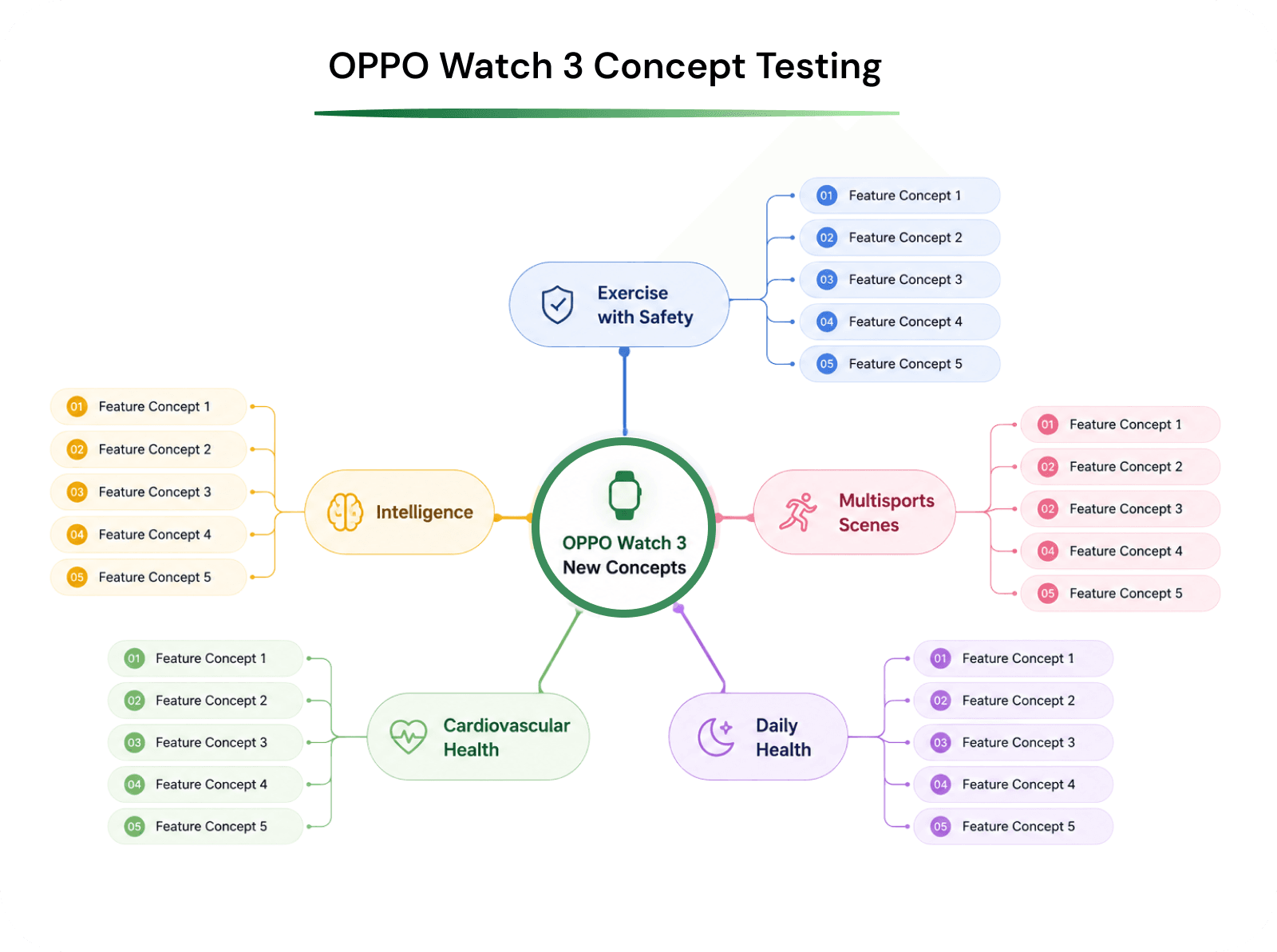
*5 distinct group concepts, and each main concept has 5 feature concepts.
The findings from the sleep research directly informed how sleep data was structured and communicated in the final product.
A recurring insight was that participants questioned the reliability of a single "deep sleep duration" metric. Rather than accepting one aggregated value, they wanted greater transparency into how their sleep was measured and interpreted. In response, the final experience shifted from presenting a standalone summary metric to visualizing individual sleep stages, enabling users to better understand the underlying data behind the overall sleep assessment.
Beyond sleep tracking, the research revealed a broader communication challenge. Participants consistently expressed uncertainty and anxiety when health notifications lacked sufficient context. Ambiguous or overly clinical alerts often led users to speculate about potential health issues, reducing confidence in the product rather than increasing it.
While this insight did not translate into a single standalone feature, it became an important design principle throughout the project. It informed ongoing discussions around health communication and reinforced the team’s decision to prioritize clarity and reassurance over raw data in health-related messaging.


I’m always happy to chat about design, AI, marketing, and new opportunities! If you’d like to create something meaningful together, don't hesitate to reach out.