Designed a points-based reward system to drive user engagement, enabling members to accumulate points through platform activity and redeem them for research tools, discounts, and other lab-related benefits.
Product Design
0-to-1 Products
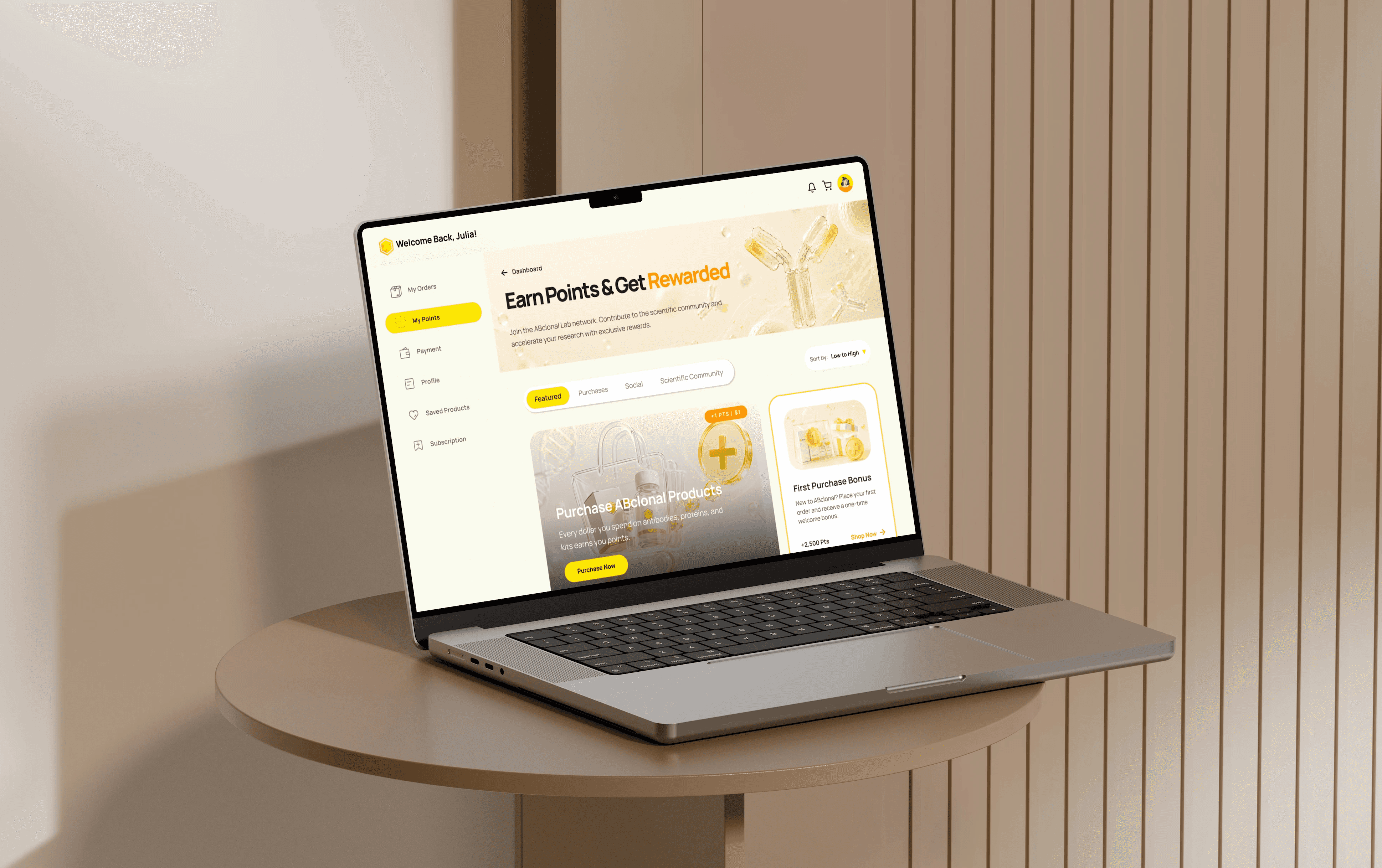
Designed a points-based reward system to drive user engagement, enabling members to accumulate points through platform activity and redeem them for research tools, discounts, and other lab-related benefits.
Product Design
0-to-1 Products
Project Overview
ABclonal set out to launch its first intentionally designed loyalty program to strengthen long term customer relationships across its digital ecosystem. Although a basic points system already existed within the member center, it had never been fully designed or formally introduced to customers, which resulted in low awareness and limited engagement. I led the end to end product design of the loyalty experience, working closely with marketing, engineering, and business stakeholders. The redesigned program created a stronger digital touchpoint for researchers and encouraged more customers to engage through their online accounts. In turn, it helped establish a foundation for richer CRM data, more effective customer relationship management, and a more scalable digital engagement strategy.
Role
Lead Product Designer
Timeline
6 months
Type
Life Science
Loyalty Program Design
B2B Customers
Growth Strategy
Engagement among existing account holders increased by 43% within three months of the initial launch.
Satisfaction increased by 85% after the second design iteration.


ABclonal sells antibodies and reagents to life science researchers. Like most B2B companies with a long sales cycle, its relationship with customers lived in two disconnected worlds: an online storefront with member accounts, and an offline sales relationship built on quotes, reps, and trust. A loyalty program sounds like a straightforward way to bridge the two. It wasn't.

Early research uncovered an important constraint before a single screen was designed: unlike consumer loyalty programs, a B2B program for life science products could not rely on rewards to influence purchasing behavior.
Researchers don't buy antibodies or molecular biology reagents because of reward points. Purchasing decisions are heavily driven by experimental needs. If a laboratory doesn't need a particular reagent for an upcoming experiment, even an attractive reward is unlikely to change that.
This insight fundamentally shaped the design strategy from the beginning. The loyalty program was not expected to create demand on its own. Our goal was to create value throughout the customer journey by helping researchers discover existing benefits, remain engaged with ABclonal, and make the most of purchases they were already planning to make.
By encouraging more customer activity to move from offline channels into the digital ecosystem, the program would also help ABclonal capture richer CRM data and manage customer relationships more effectively over time.
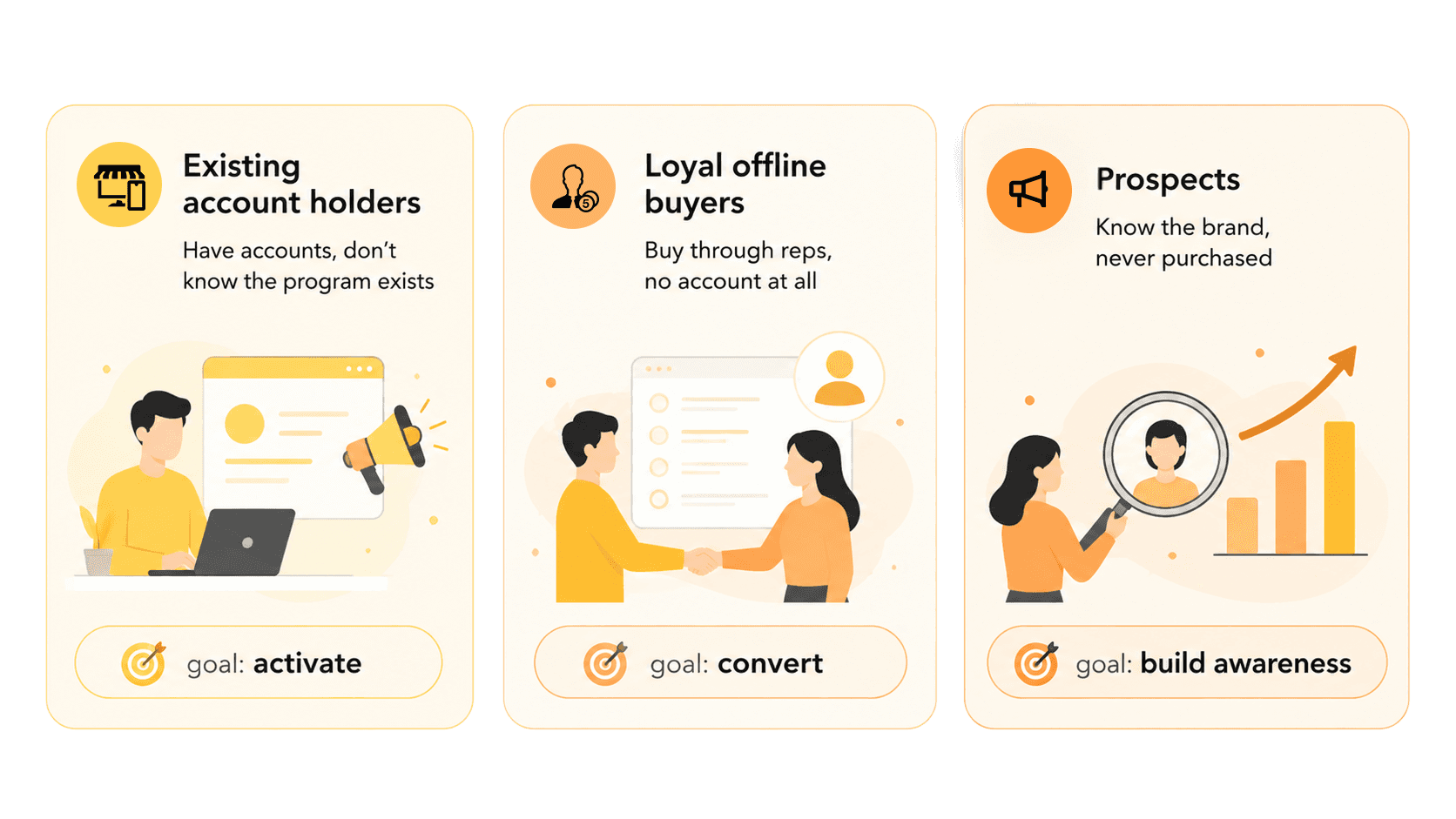
The answer came from looking at who wasn't using the member center rather than who was. ABclonal's customers split into three groups, each with a different relationship to the loyalty program:
Existing account holders who didn't know the loyalty program existed
Loyal offline buyers who worked only through sales reps, with no account at all
Prospects who knew the brand but had never purchased
A single "increase engagement" goal meant nothing until it was broken apart by audience, so that became the actual brief: activate the first group, convert the second, build awareness with the third.
A version of the loyalty program had technically existed for some time, built as a functional add-on to the Member Center rather than as a thoughtfully designed product. It had never been fully designed or formally launched, and most existing account holders had no idea it was there. This was less a first version to iterate on than a starting point for designing the experience from scratch. The underlying mechanics existed, but the user experience and awareness around the program did not.
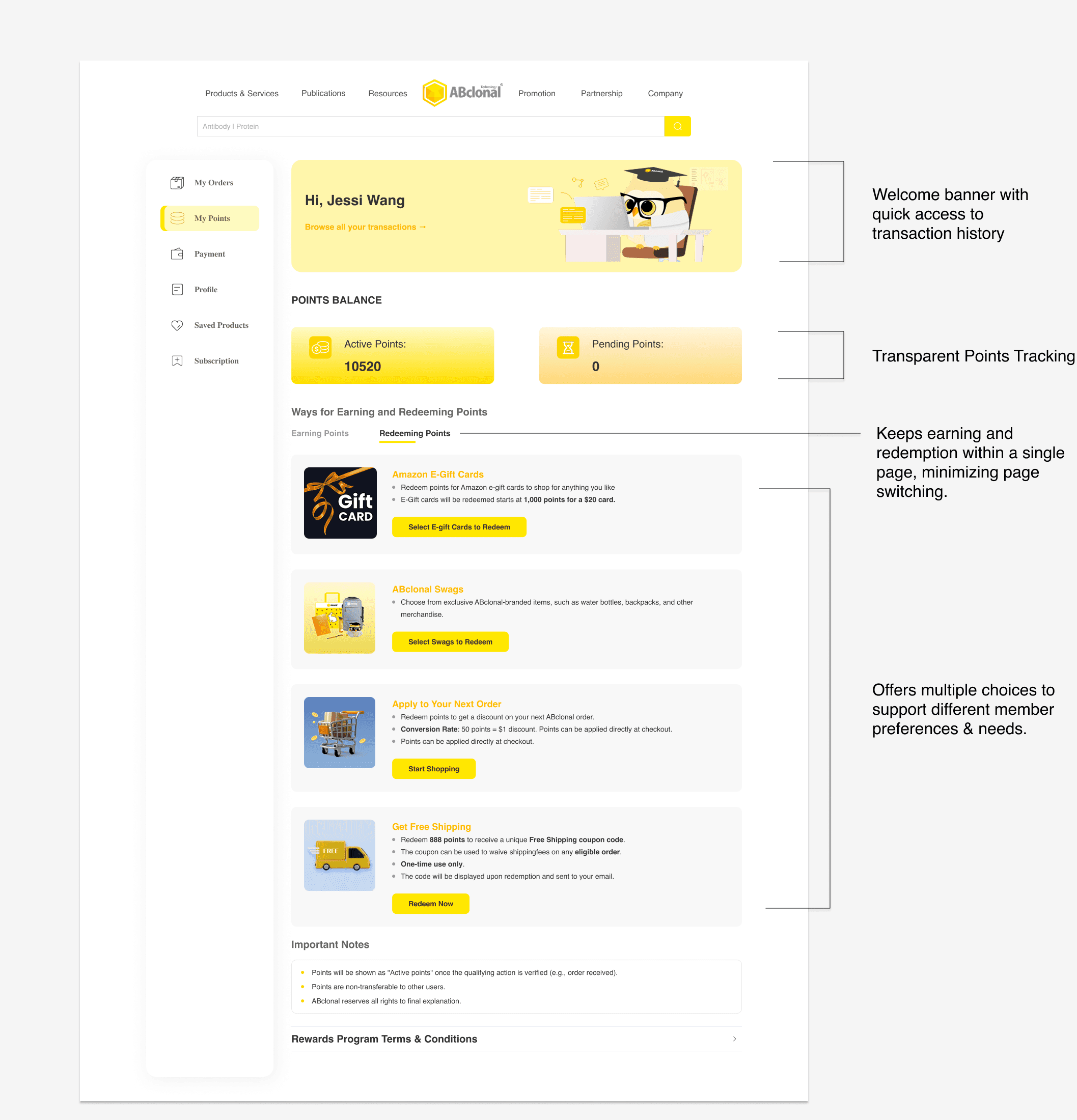
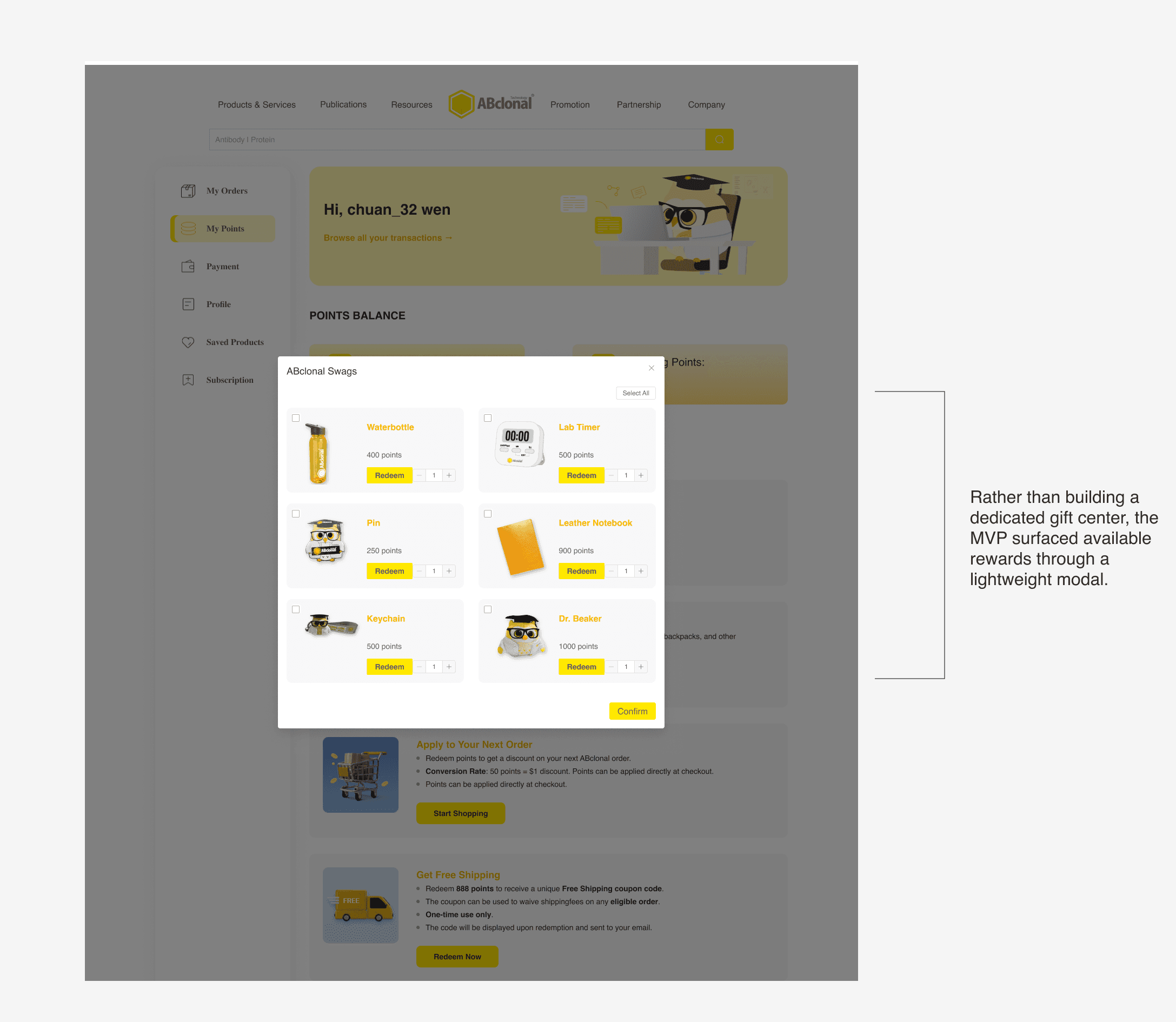
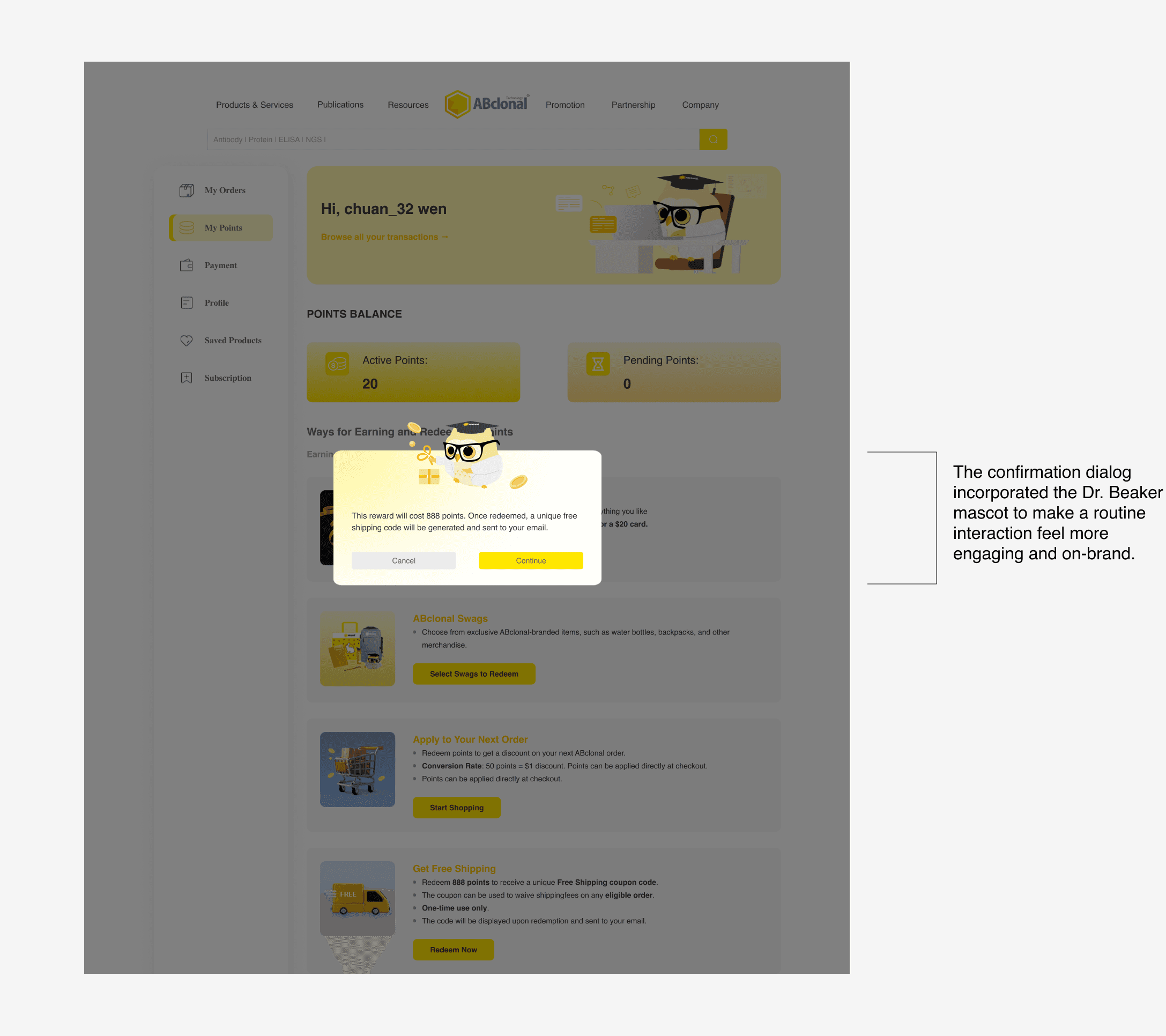
Existing account holders were the first audience able to participate immediately, making them the natural focus for the initial release. The MVP established the program’s core experience: transparent point tracking, flexible earning and redemption options, and a cohesive end-to-end journey within the Member Center. By focusing on the most essential capabilities first, we accelerated the launch and established a scalable foundation for future iterations.
However, getting the other two audiences to engage would require more than good design, it would require getting the word out in the first place.
Some customers already had online accounts and regularly interacted with the brand through digital channels, while others primarily purchased through sales representatives and had little or no online presence.
To make the program accessible across the full customer journey, the launch combined three complementary touchpoints: (1) in-person flyers, swag giveaways, and program introductions at life science conferences, helping offline buyers and new audiences discover the program; (2) email campaigns reaching existing customers and marketing leads in our database; and (3) a dedicated website landing page that introduced the program to all visitors, whether they were returning customers or encountering the brand for the first time.
Together, these channels created a connected launch strategy that extended beyond the website and made the loyalty program visible across both digital and in-person experiences.
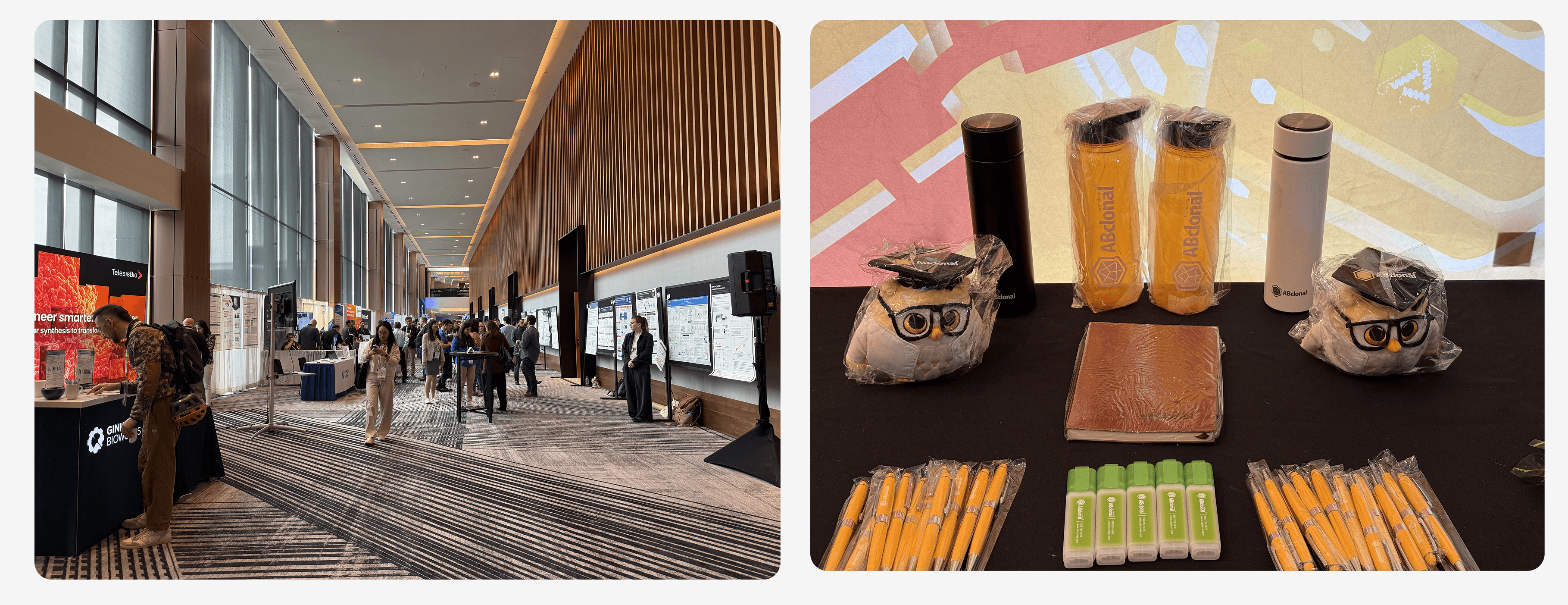
Life science conferences provided an offline touchpoint for introducing the digital loyalty program to customers, prospects, and sales-led buyers.
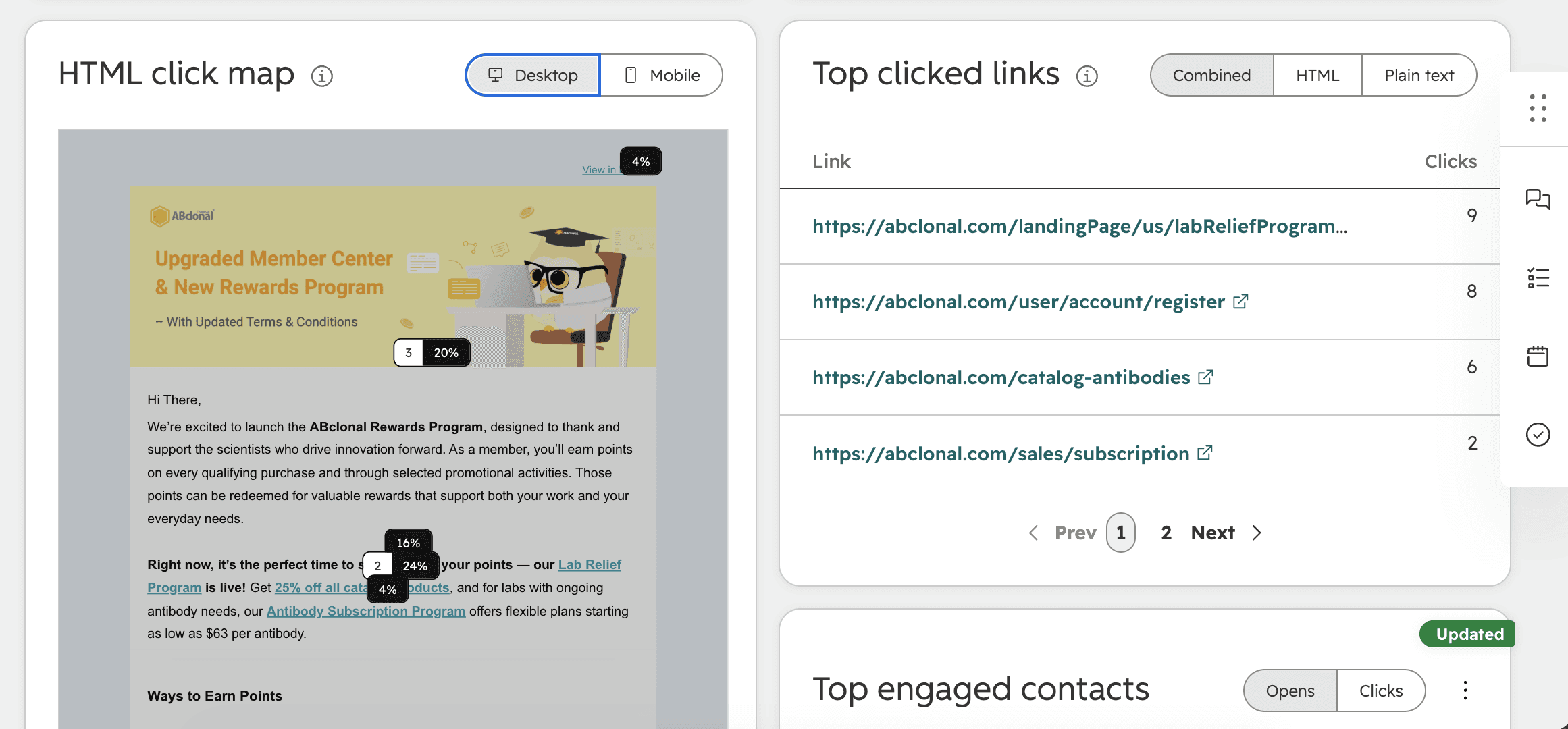
Email campaign analytics turned the launch into a measurable growth loop, using click maps and top-link performance to understand which messages and entry points most effectively drove familiar customers and opted-in leads toward deeper program engagement.
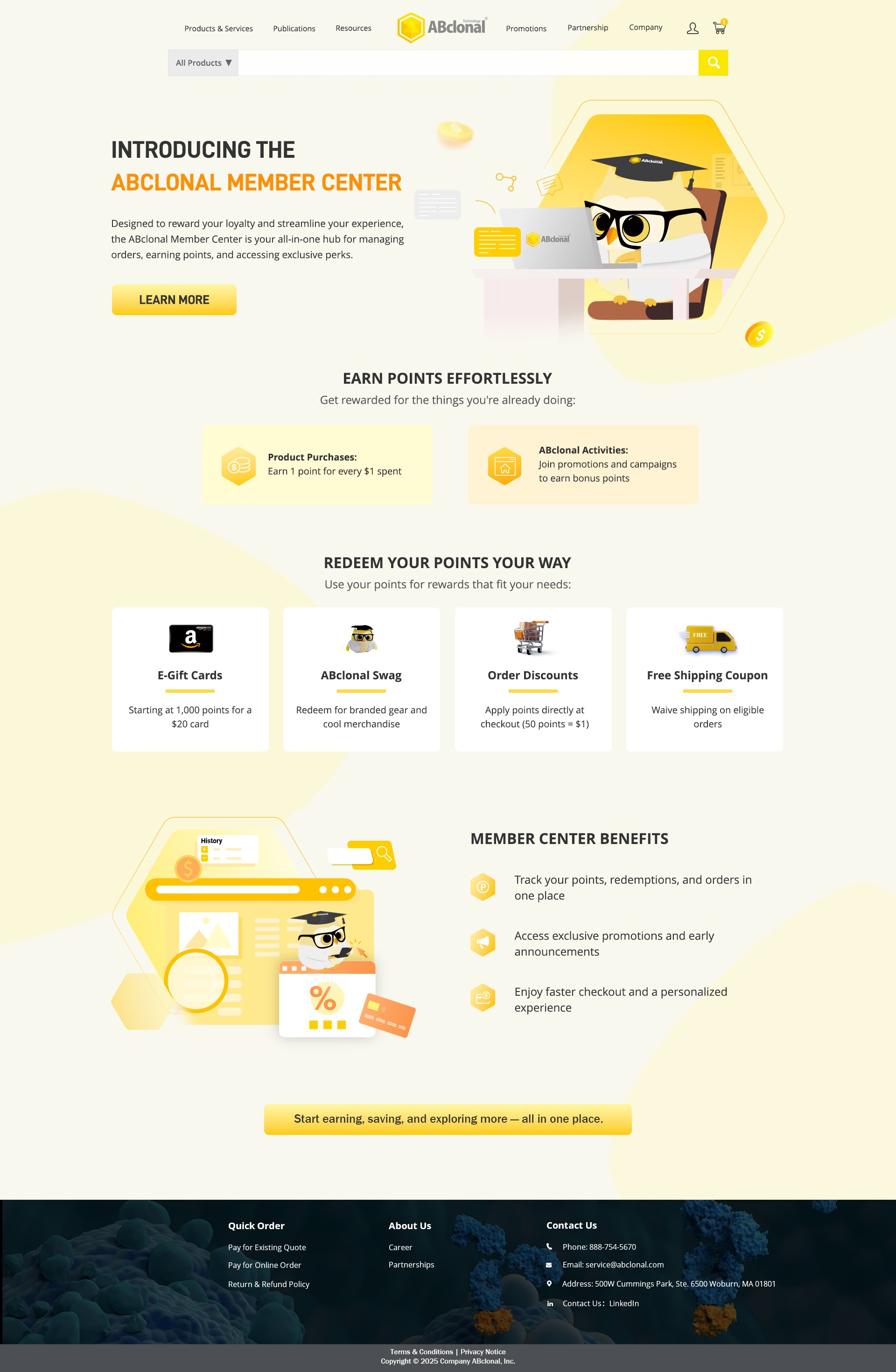
The landing page design created a public-facing introduction to the loyalty program, giving all website visitors a clear first layer of program awareness before account sign-in unlocked the full Member Center experience.
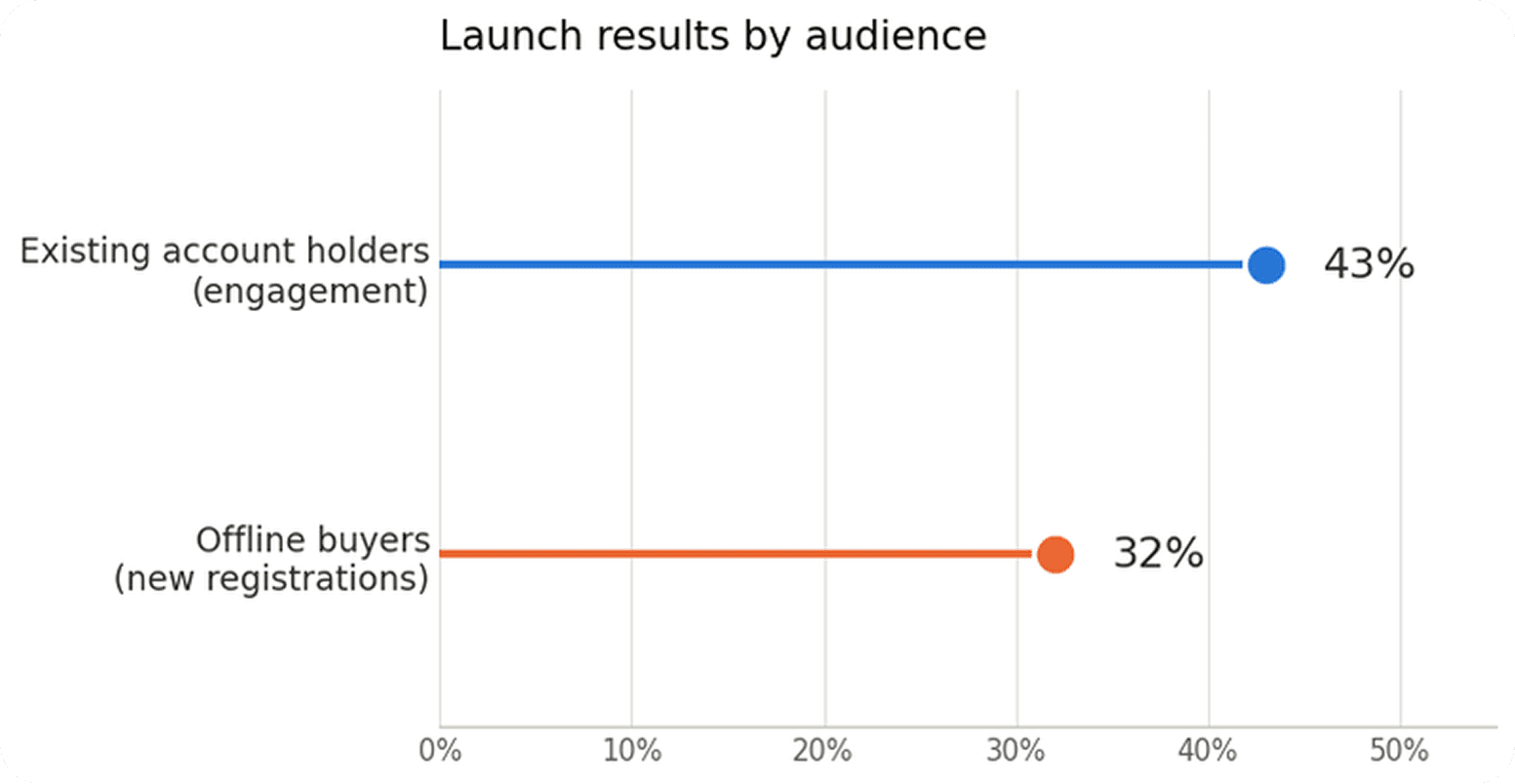
The relaunch was measured against the three goals it was built for. Among existing account holders, the group who could act immediately, engagement with the loyalty program rose 43% within the first three months. Among loyal offline buyers, the multi-channel push converted 32% of them into registered accounts for the first time. Reaching prospects with no purchase history was harder to measure directly, since awareness doesn't convert into a single trackable action, but the clearest signal came from new account registrations that could be traced back to the multi-channel push rather than any single awareness metric.
For a program explicitly not designed to move sales, these were the right signals to be watching, and across all three audiences, they pointed the same direction.
Registration and engagement metrics answer one question: did people show up? They don't answer the next one: did the experience actually work once they were inside? That question only got answered through direct user feedback and a round of usability testing, and the answer was more complicated than the launch numbers suggested.
Four problems surfaced, each one invisible from the outside:
Too few rewards, then too many. Users wanted more rewards than the program launched with, and once the catalog grew to meet that demand, it no longer fit inside a homepage widget, it needed a page of its own.
No sense of progress. The single point total gave users no sense of distance to anything, no way to know if a reward was close or far away.
Points or rewards, never both. Checking what you could redeem meant opening a panel that covered your point balance entirely.
Earning actions with no relevance. The ways users could earn points weren't built around anything that mattered to a researcher's actual work.
None of this showed up in the registration or engagement numbers. All of it showed up the moment real users tried to actually use the thing.

I’m always happy to chat about design, AI, marketing, and new opportunities! If you’d like to create something meaningful together, don't hesitate to reach out.