Designed the Exposure Signal Module for CyberCube’s cyber insurance platform, enabling underwriters to analyze cyber risk signals and make informed decisions.
Enterprise SaaS
Product Design

Designed the Exposure Signal Module for CyberCube’s cyber insurance platform, enabling underwriters to analyze cyber risk signals and make informed decisions.
Enterprise SaaS
Product Design
Project Overview
At CyberCube, I designed several product features that support cyber insurance workflows. This case study focuses on the design of the Exposure Signal module within Account Manager, a platform used by insurance underwriters to assess cyber risk. The goal was to make the factors behind an organization's cyber exposure score more transparent, enabling users to identify weaknesses, investigate score changes, and make more informed underwriting decisions.
Role
Product Designer
Timeline
4 months
Type
B2B SaaS
CyberSecurity
SaaS Design
Increased underwriters’ work efficiency after launch.
Lowered AM churn and improved customer loyalty.
Cyber insurance helps organizations manage the financial risks associated with cyberattacks and other digital threats. To make informed underwriting decisions, insurance underwriters assess organizations using a wide range of cyber risk indicators.
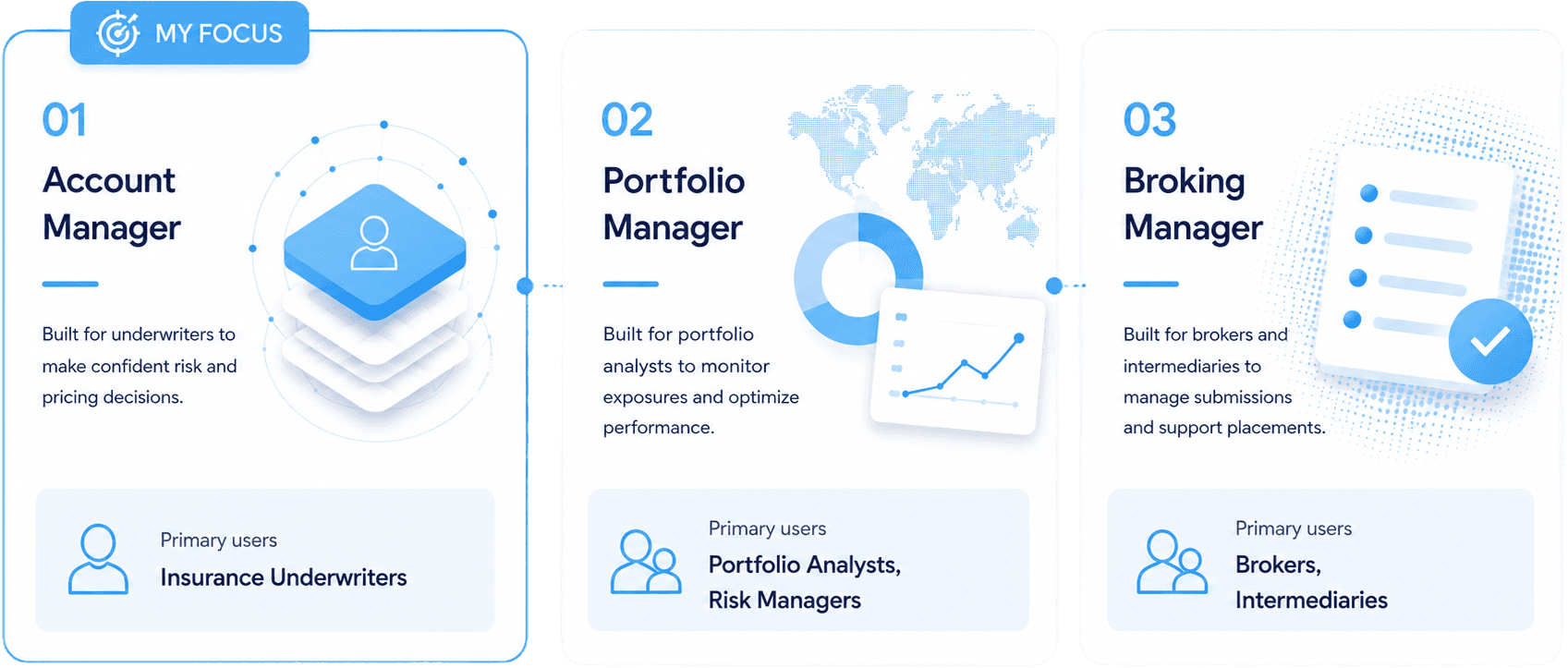
This project focused on CyberCube Account Manager (AM), a SaaS platform that supports underwriters in cyber risk selection and pricing decisions. Among CyberCube’s three products, AM was the focus of my work, with insurance underwriters as its primary users.
Every underwriting decision starts with one simple question:
Why is this organization considered risky?
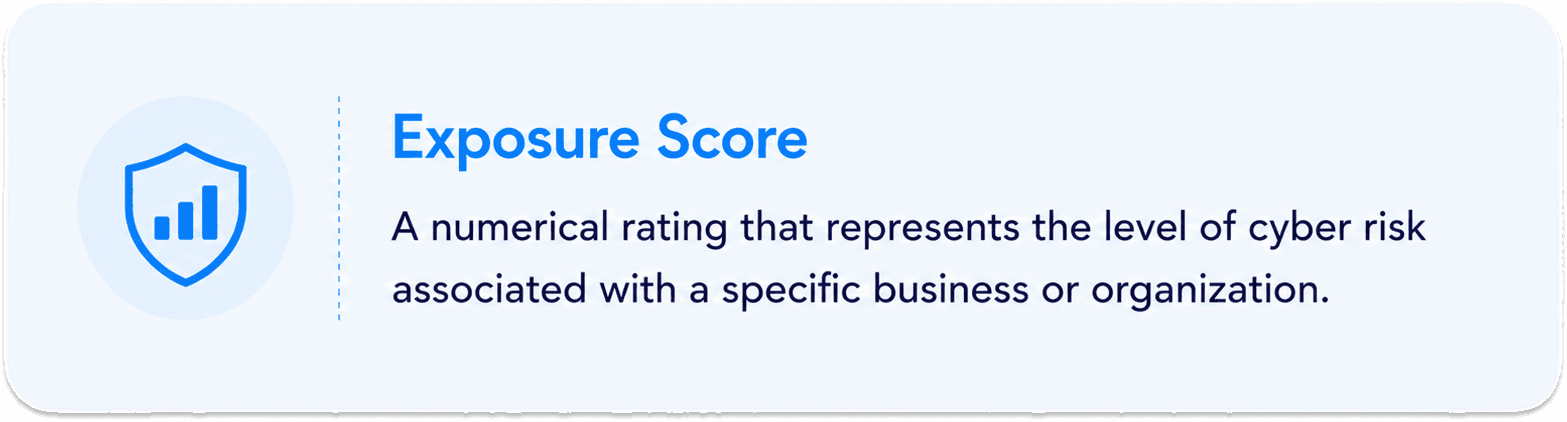
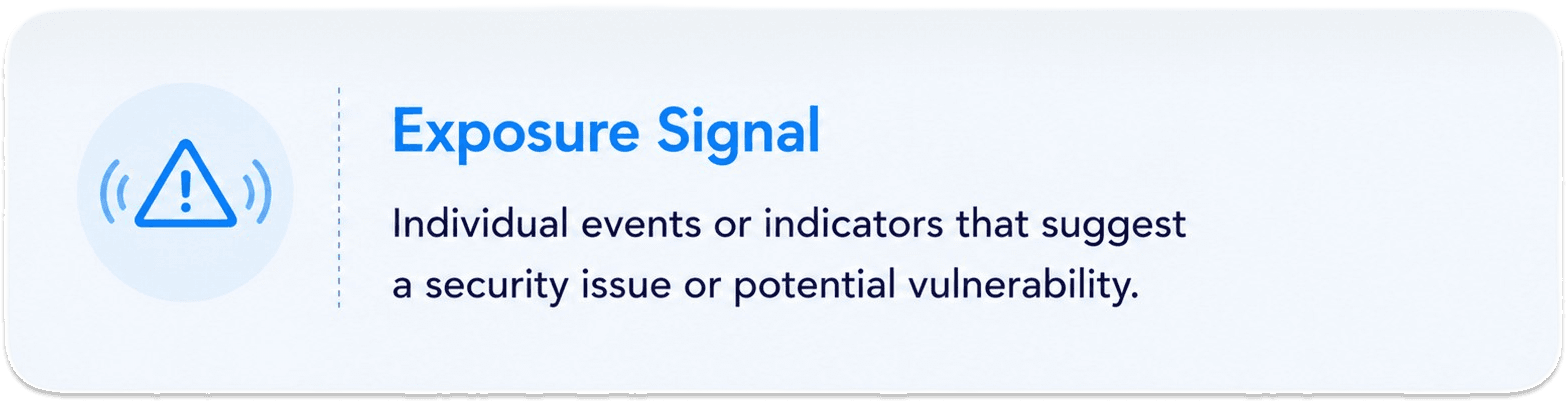
CyberCube could already communicate how risky an organization was through a composite Exposure Score, but users had limited visibility into the individual Exposure Signals contributing to that score.
My challenge was to transform an opaque risk score into a clearer investigation experience, one that helped underwriters understand the signals behind the score and make more informed decisions.
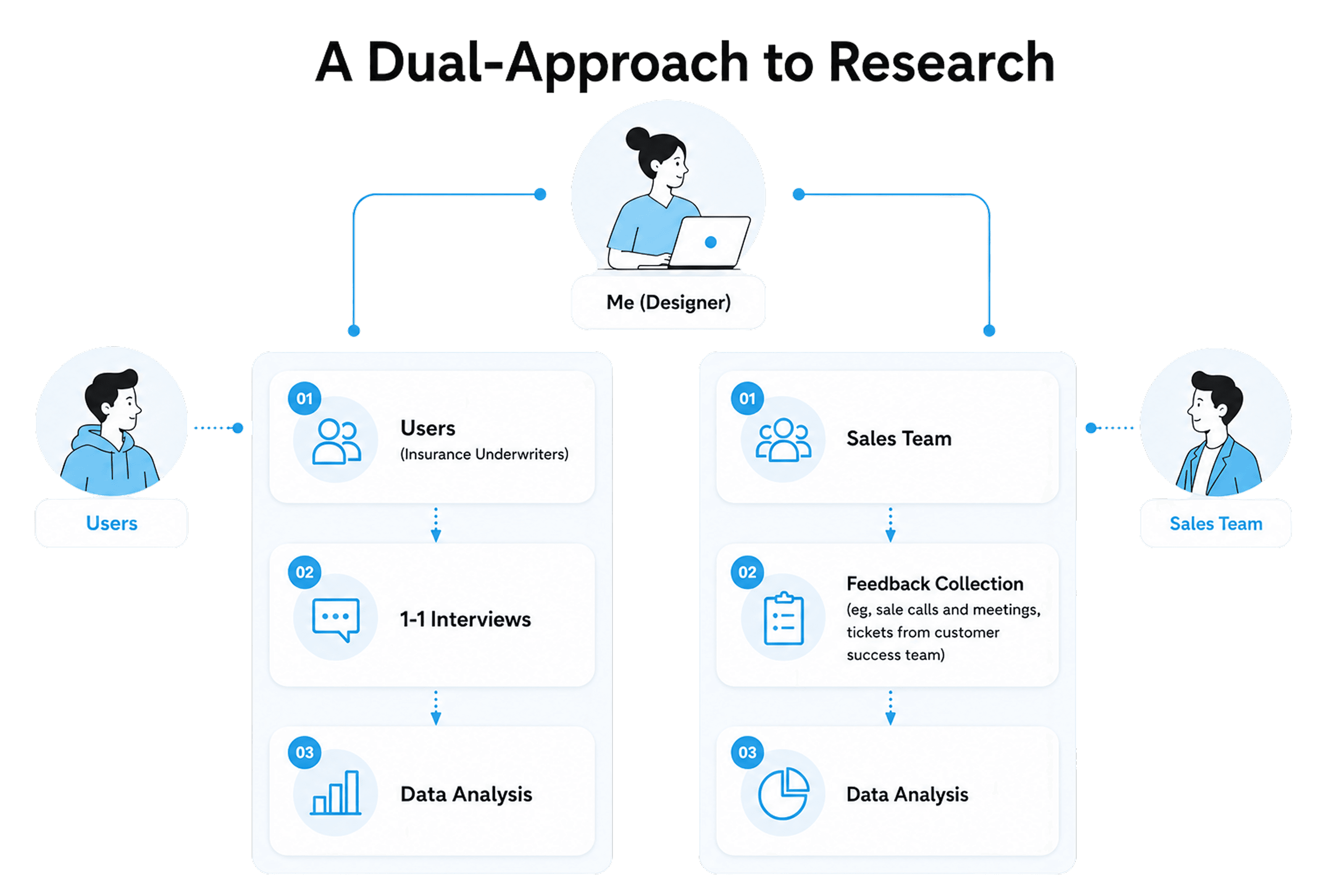
Designing for a highly specialized B2B SaaS product introduced an unusual research challenge. Cyber insurance underwriters represent a niche user group, making participant recruitment difficult within the project's timeline.
Instead of relying solely on user interviews, I expanded the research approach by collaborating closely with Product, Customer Success, and Sales teams. Together, we analyzed recurring customer questions, support tickets, sales conversations, and product feedback alongside direct interviews with underwriters.
This dual-approach allowed me to uncover consistent user behaviors and pain points that individual interviews alone could not reveal, ensuring design decisions were grounded in real customer workflows rather than assumptions.
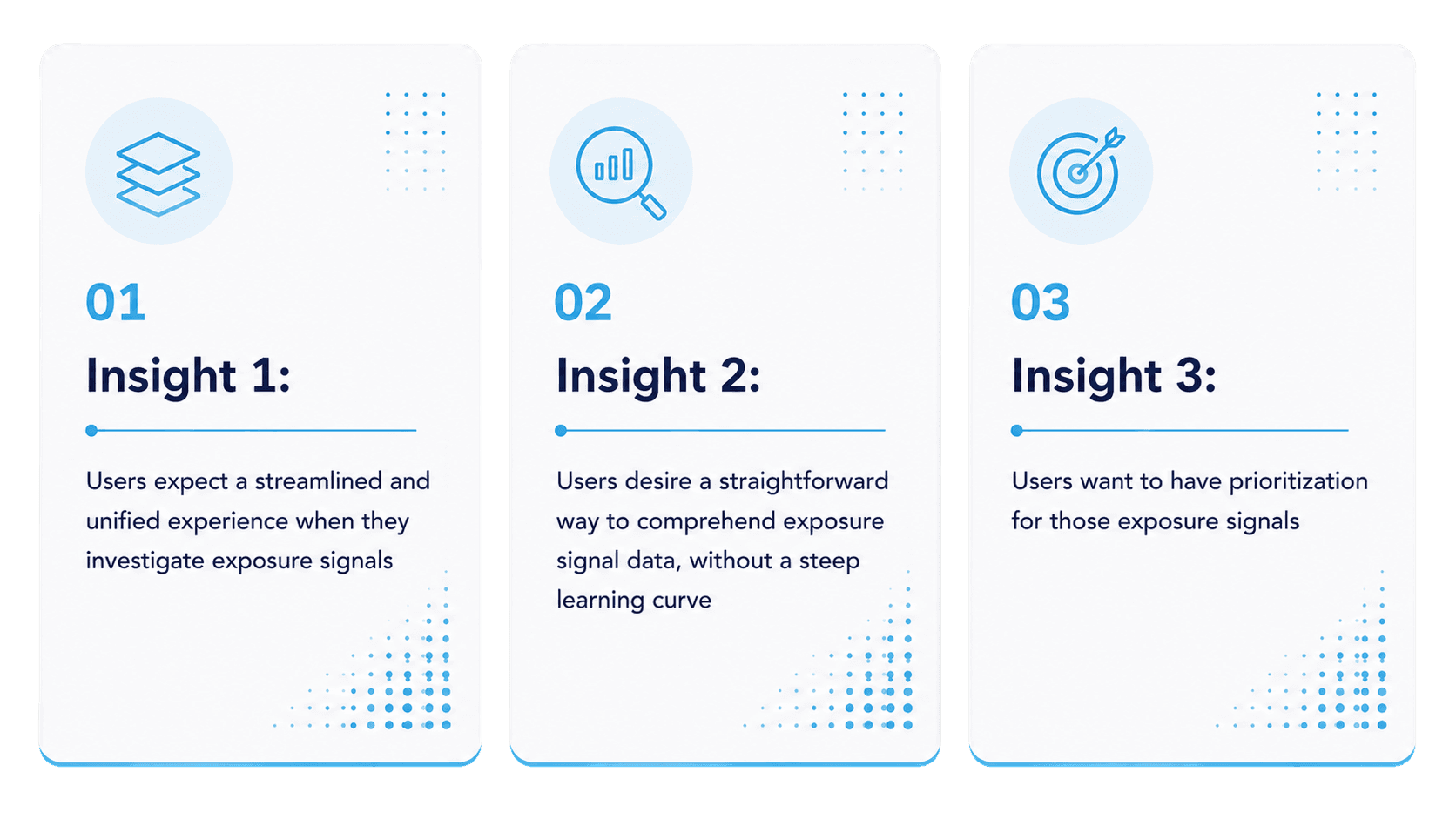
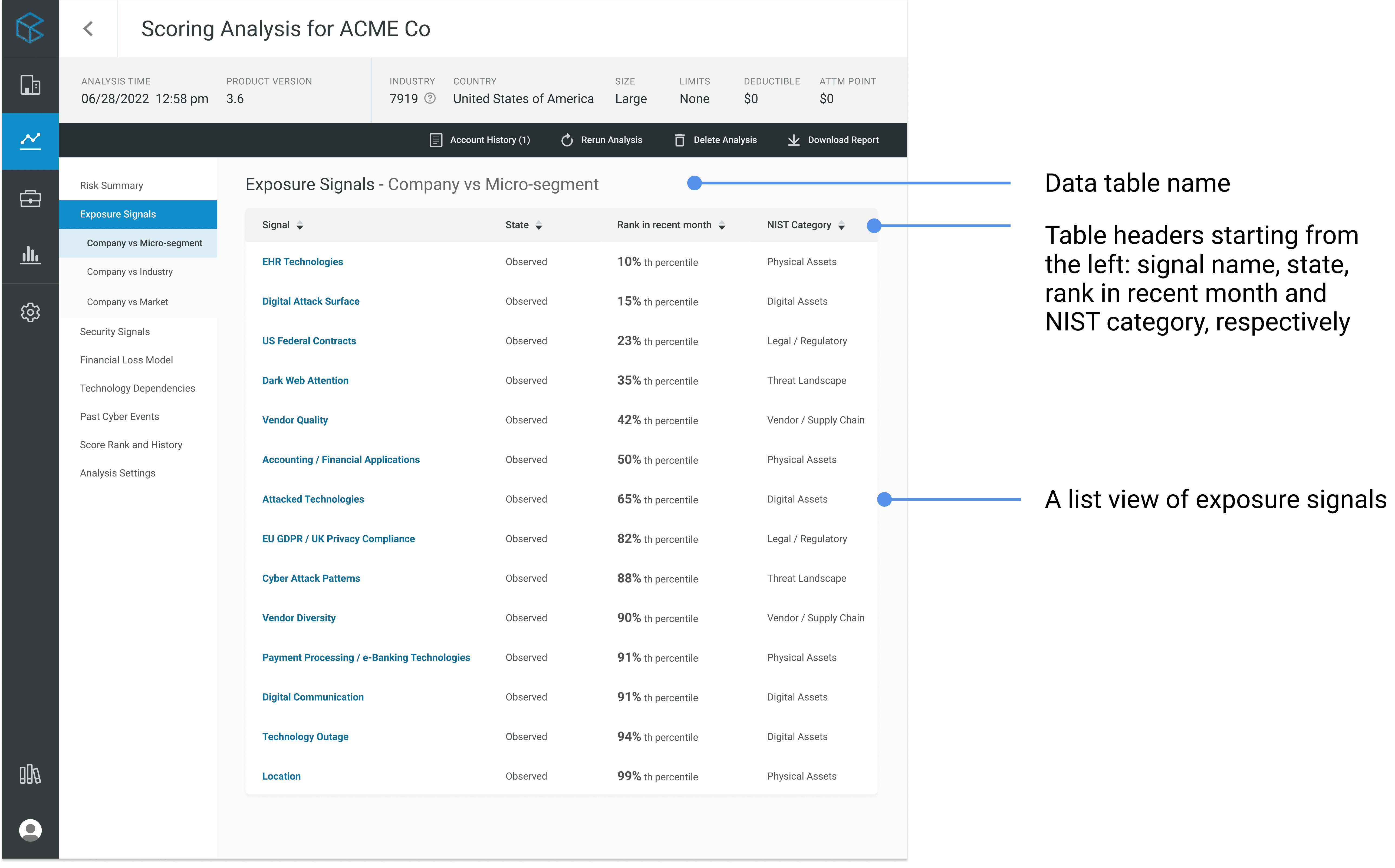
My initial direction focused on making the underlying exposure signals visible and easier to investigate. I introduced a centralized list view where underwriters could review institution-specific signals within a single workspace rather than relying on the composite score alone.
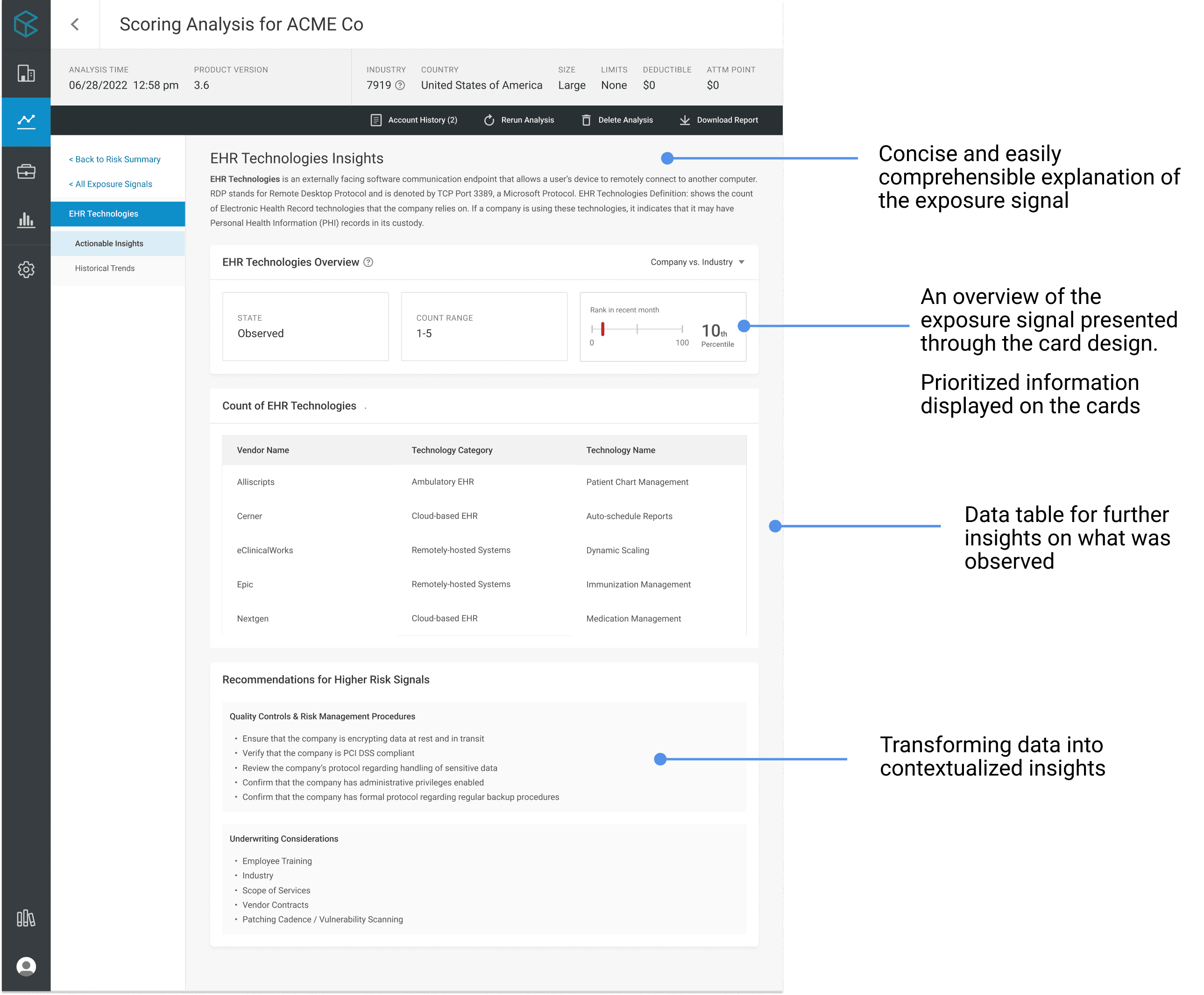
Rather than presenting isolated signal data, I designed an Actionable Insights page that combined explanations, severity, supporting evidence, and recommendations, helping users quickly understand what each exposure signal meant and why it mattered.
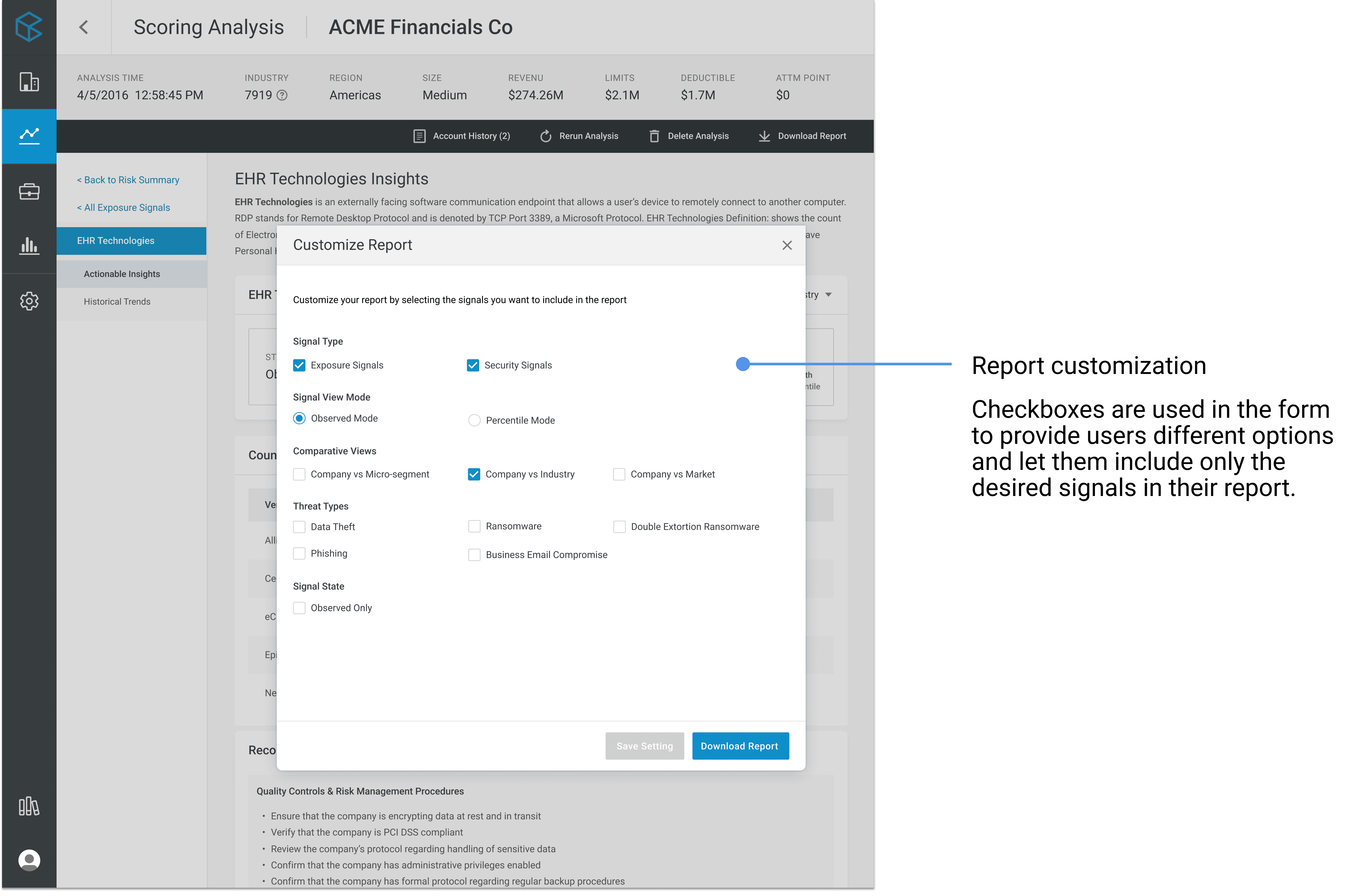
I believed the reporting experience should support different investigation needs. The Customize Report flow allowed users to select relevant signal types, comparison views, and threat categories before generating a report tailored to the case.
At this point, I believed the design successfully addressed the research findings.
User testing told a different story.
Watching underwriters complete real tasks revealed moments of hesitation, unexpected mental models, and opportunities to improve clarity throughout the experience. Some information remained difficult to interpret, while several interactions required more effort than users expected.
These observations challenged my initial assumptions and became the foundation for the design iterations shown below.
Due to NDA restrictions, some testing insights and design details are not included here. Please reach out if you’d like to learn more about the findings and how they informed the final design.
An integrated experience of investigating exposure signals along with actionable insights, then download the tailor-made report

I’m always happy to chat about design, AI, marketing, and new opportunities! If you’d like to create something meaningful together, don't hesitate to reach out.


