Understanding the decisions behind the application
We conducted multiple rounds of research throughout the project, combining surveys, in-depth interviews, usability testing, and competitive analysis.
Early research explored how students approached college preparation and accessed guidance. We examined how they searched for information and decided what to prioritize, while reviewing how existing products organized admissions resources and counseling support.
As the product developed, research and testing helped us revisit specific design directions. We explored how learning should be structured, what students should encounter on the dashboard, and how personalized insights and AI support could fit into their preparation.
Our early concepts made the vision tangible. They also exposed questions that the idea of a “personal counselor” alone could not answer: how much direction should the product provide, and how much should students have to figure out for themselves?.
Closing the gap between information and guidance
The initial experience brought together a resource library, planning tools, student metrics, and AI chat. Each addressed part of college preparation, but connecting them into a guided experience required us to reconsider how they worked.
Four decisions shaped that evolution.
01. The resource library still left students to find their own way
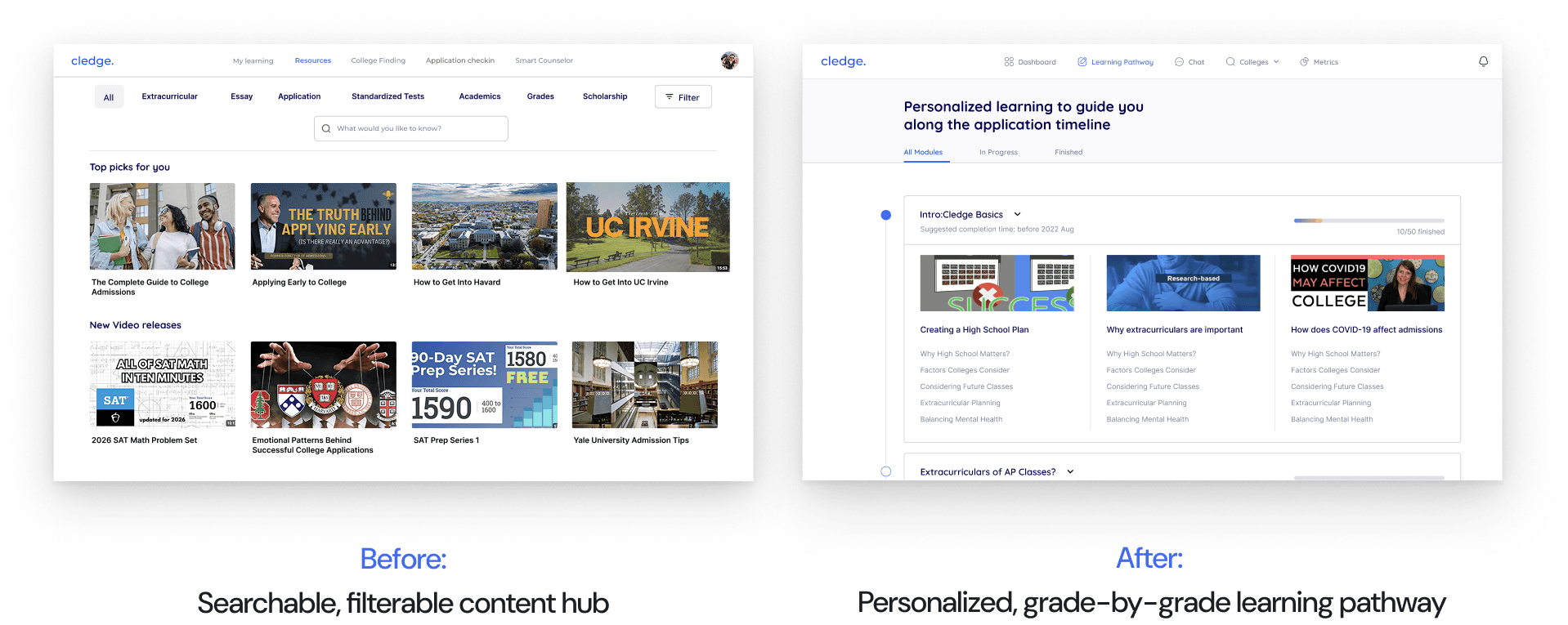
Our early learning experience made admissions content searchable and easy to browse. Students could filter topics and explore resources, but the interface still left an important decision to them: where should they begin?
Students seeking direction still needed to assemble their own path through the information.
Therefore, I redesigned the experience as a personalized learning pathway organized around grade levels and the application timeline. The platform could provide a starting point and a sense of progression, alongside the resources themselves.
02. A learning pathway gave us a reason to rethink the dashboard
An early direction combined the dashboard and learning pathway. As we refined their roles, we needed to decide what deserved attention when a student first entered the product.
I separated the two experiences. The dashboard became a place to review tasks and access relevant tools, while the learning pathway provided a dedicated space for working through admissions topics.
That separation did not settle the dashboard design immediately. We explored several versions, beginning with feature introductions and a to-do list, then emphasizing tasks more strongly before incorporating recent activity.
Each iteration reconsidered how much explanation, direction, and context the page should provide. The dashboard’s role became clearer: help students orient themselves before moving into a specific activity.


03. An assessment needed somewhere to lead
Student metrics helped students understand their academic and extracurricular standing. Early insights, however, offered limited detail about what they could do with that information.
I developed a more detailed, personalized experience that paired assessments of competitiveness with clearer suggestions for improvement. Students could review individual activity metrics and update their profiles as their experiences developed.
The design challenge was to connect an assessment with a useful next step. Showing students where they stood created an opportunity to help them consider how to move forward.

04. A more natural conversation was no longer enough
We began designing the AI chatbot shortly after ChatGPT emerged, but our early approach still reflected familiar customer-support patterns. Suggested questions, selectable options, and onboarding instructions taught students how to ask for college admissions guidance.
It looked like an AI counselor, yet the interaction felt closer to a virtual support agent. As AI conversations evolved, we recognized the limitations of that approach: it felt scripted and offered too little room for a student’s individual situation.
Moving toward a more open conversation addressed part of the problem, but raised a bigger question: if students could already talk to ChatGPT, what would make Cledge worth choosing?

We kept the chatbot as a convenient way to access guidance within Cledge, without switching to another tool. At the same time, we began exploring where our own resources could support a more distinctive experience.
One opportunity was college essay support. We began designing an AI Essay Tool that brought categorized feedback and relevant essay examples into the writing process. This opened a new direction for Cledge, extending personalized support beyond the chat interface.
Curious about the AI Essay Tool and how the project evolved? Get in touch, and I’d be happy to share more details.


